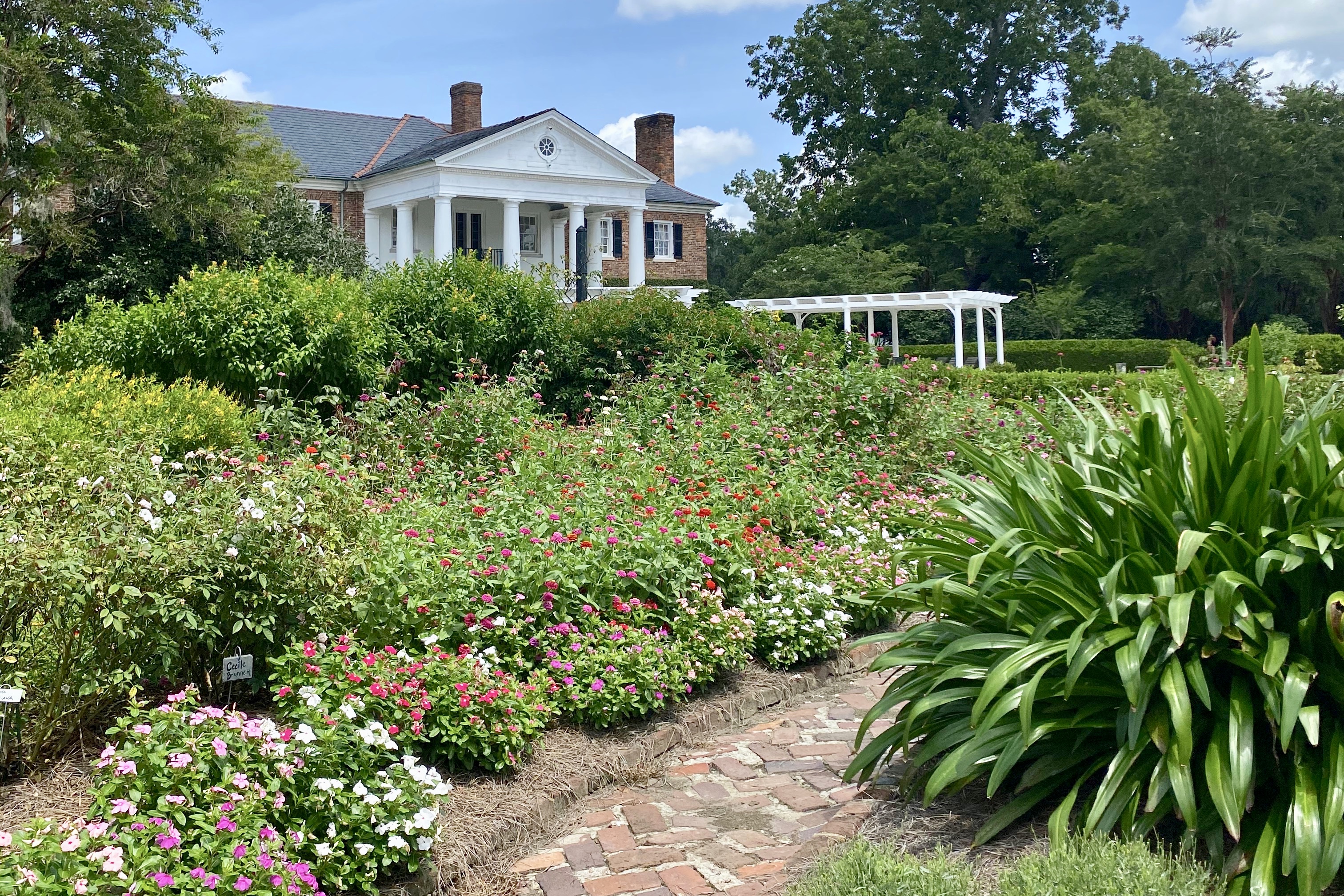
Boone Hall Plantation is the magnificent grand entrance you expect from the Southern plantation movies. As the longest continually working plantation in the country, Boone Hall Plantation South Carolina is a lovely place to experience real southern history. Just outside of Charleston, Boone Hall Plantation tours allow you to experience beauty along with the real story of Boone Hall plantation history: enslaved people working in the brickyard, the history of the plantation house, and the farm at the heart of the operation.
Tall towering oaks line both sides of the one lane road leading up to the grand entrance of the Boone Hall Plantation and Gardens. The white façade of the main plantation house is visible in the distance with tall two-story columns on the porch and formal gardens flanking the sides.
Keep reading for top real-life mom tips for a family trip to Boone Plantation near Charleston. It’s a great day trip from Charleston.

FAQs about Boone Hall Charleston, SC
Why Should I Visit Boone Hall?
Boone Hall Mount Pleasant, SC is more than just an old home tour; it shows the harder aspects that made it a plantation and not just a farm. Walk down the main path to see the slave quarters which have been turned into amazing museums complete with an inset view into the archeological digs occurring in the floor. Immerse yourself in the Gullah presentation. Take some time to enjoy the views over the water. Step back into history.
What is Boone Hall Plantation?
Boone Hall was founded by Major Boone in 1681, but the current standing house dates back to 1936. During your Boone Hall Plantation tour, you are able to view the first floor of this Georgian home which has been decorated to represent the time through antiques. The porches overlook the beauty of the low country marsh and the overarching Southern oak trees that line the front driveway dating back to the mid-1700s.
My Boone Hall Plantation Tour Review
The Good: The Gullah culture presentation presented by a Gullah woman was amazing. She brought history to life through family stories, telling of the culture, and even singing songs from her childhood.
Worst part: The heat. You will be outside all day, and it will be steamy. Arrive as early as you can at opening time. You can go inside the slave houses, but even with the doors open, there is not much air circulating. There is some shade during the Gullah presentation and the main house is air-conditioned. Bring your sunhat and water bottle; consider cooling off afterward with ice cream from the store.
Boone Hall Plantation FAQs
How much are Boone Hall plantation tickets?
Boone Hall tickets are all-inclusive. There are no extra fees for seeing different parts of the plantation unlike tickets for other plantation tours in the area. The cost is $28 for adults, $12 children 6-12 years old, and kids under 5 are free.
How Far is Boone Hall from Charleston?
If you’re looking for a quick day trip from Charleston, Boone Hall Plantation is a quick 20 minutes from downtown Charleston.

What Activities are at Boone Hall?
The House
The building itself has an interesting history and has changed a lot since the first small, wooden, basic farmhouse. This current house wasn’t built until one hundred years ago when it was bought by its third owners who rebuilt the house as they thought a plantation house should look.
The plantation house of today is a personal residence. Because of this fact, only the downstairs is open to viewing. Most impressive inside is the library room that would make any “Beauty and the Beast” fan jealous – including the bibliophiles in our family.
Explore the Boone Hall Gardens
The formal flower garden on either side of the house is surrounded by a serpentine brick wall. Although he didn’t invent this design, it is known that these are the type of walls Thomas Jefferson constructed at his own home due to their ability to withstand external pressures better than the more common straight walls. We made the connection to these walls at the Jefferson’s University of Virginia as well.
Don’t forget to wander past the house to visit the oldest tree on the plantation which overlooks the swamp. Although not posted anywhere I could see, behind the house is a nature trail that goes around the lake. Save time for this and go watch the water birds.

Gullah Culture Presentation
The highlight of our five hour visit to the plantation on this warm day was the Gullah presentation. Led by a vibrant elderly woman of Gullah heritage, we were told first hand stories passed down to her from her Gullah grandmother including speaking some of the words she would have heard as a child in the Gullah dialect. She even had our group of visitors singing along with her songs. While not speaking only about slavery, her focus was more on the world that was created by as the enslaved people formed their own culture when arriving on American soil with a variety of West African languages, songs, and cultures. These differences came together to form the unique culture only found in this area of the South Carolina coast.
Slave Quarters
Along the road to the house, the six slave quarters are about 100 yards from the main entrance to the house. At one time, the plantation was the major distributor of bricks used to construct the busy port city of Charleston, and the bricked the slave houses here were built with the damaged, remnant bricks which were not good enough for the wealthy families of the nearby city.
For the history of slavery in America and on the plantation, go visit the slave houses. Talk to the guide. Visit with and buy a sweetgrass basket from the artisan. Show your kids the timeline of Civil Rights and show how far we’ve come. Find the historical figures you know and write down the ones you will look up later. One of the cabins has evidence of an ongoing archeological dig as well as explanations of the artifacts which have been found in the area – how they lived, real time.
Why only six houses? Each house would have held multiple families. After working for the day, extra food was found by fishing in the nearby river and planting their personal gardens. These housed the house slave who would have had very little interaction with the farm slaves. Field slaves lived near their work – out near the fields. Made of lower quality wood, these wooden slave houses are no longer visible on the tour.

Farm Ride
Hop in the covered trailer for a 30-minute ride around the three hundred year old farm to see the crops that are currently being grown and to learn more about the history of the plantation. Honestly, this part of the tour wasn’t really something I planned to do, but my kids loved it. They got to see how the different crops are grown, what’s currently in season, and hear some stories of the land. After disembarking, stop into the butterfly house for a quick visit. And treat yourself and the hopefully patient-up-until-now kids to a cold drink or ice cream.
The Trees
The Avenue of Oaks are the original 300 year old oaks which were planted by the original owner of the plantation. While the road up to the plantation has signs out that it is one lane only, pull over if no one else is coming and take the picture. Up by the house, there is a bench for you to take a family picture under one of the biggest trees.

Mom Tips for a Family Trip to Boone Hall
- Check the schedule of events so you can plan around these. There are schedules available at the entrance.
- You can carry your own water around other than inside the plantation house.
- Get to the tractor ride early enough to go to the restroom and visit the nearby snack area for a cold drink.
- Don’t wait for the tractor ride when the kids are cranky and ready to do their own thing. You’ll be up close with other families and not want to deal with fussy kids while unable to leave.
- Allow for enough time to saunter and exploring. Go down to the water near the Gullah presentation, wander the gardens, and explore the lake behind the house. This is a big place and plenty of room to let the kids be kids!
- There is a lot of reading and learning to be done in the slave quarters. If the littles aren’t up for it and older kids are, you might take turns with playing outside with Dad, so you can truly focus.
- There is a nice indoor restroom before you get to the house near the parking lot.

Learning More about Boone Hall
Mom Learning about Boone Hall Plantation
As part of your very important education, I feel like grown ups need to watch some movies as filmed on site. Watch “The Notebook” to see Allie’s family drive up to the main house and Noah jump off the pier. Patrick Swayze rides his horse up to the main house along the tree lined road in “Glory”.
Kid questions after Visiting Boone Hall
- How did slavery contribute to the plantation lifestyle?
- How do you think the Gullah culture will be in another fifty years? Will anyone know how to speak the words?
- Why is it important to experience the truth of slavery conditions? What did you learn?
- How is farming today different from 100 years ago?
- How were the bricks made?
- Why would the brick slave quarters be on the main road?
- Why are there slave quarters in several different areas of the plantation?
So much to talk about…
What is Near Boone Hall Plantation?
- Take a short detour when leaving the plantation to visit the Boone Hall Produce Stand. Let the kids get some produce fresh from the source.
- Charleston!
- Isle of Palms – It’s only about thirty minutes away and offers a laid back small-town beach, awesome shells; read all about our experience with this favorite eco-trip from the Isle of Palms.
Boone Hall Plantation is not only the oldest continually working plantation in the country, it is also one of the most beautiful. This is living history which tells the history of the plantation and how it has changed to continue to function as a family farm today.
While you won’t find the wide doorways which would have accommodated Scarlett O’Hara’s wide hoop skirt, you will find true stories. As for that updated grand plantation house you will see, just remember that on it’s own, it is a beautiful 100 year old house with authentic towering live oak trees covered by resurrection ferns. And that in itself is enough.

While Charleston has so much city history, take a short drive out into the country to visit plantation life at Boone Hall. The farm tour itself is amazing and when you add in the slave quarter history, it truly is a unique place that demands a visit.

Thanks for stopping by my little corner! Here’s to your next adventure.
I’m Bobbie. As transplants from Texas, my family of six is on a mission to discover all of Georgia’s amazing places, experience amazing road trips across the United States, and create a homeschool life along the way.
Want to adventure like me? Reach out! I’d love to chat. Stop by my Instagram or Pinterest page to discover more of our adventures.
Want to work with me? I’d love to work with your destination and tourism board to help other family travelers see all you have to offer.
Leave a Reply