Toledo, Spain: The Best History Sights for Your Trip

A visit to Toledo, Spain is a must to understand the different layers of Spanish history. The best way to understand this former Spanish capital isn’t by studying a timeline or a must-see Toledo checklist. Wander to explore the amazingly preserved buildings of historic Toledo and its history as the City of Three Cultures

Street Scene Toledo, Spain

Just thirty minutes from Madrid by high-speed train, Toledo is a perfect day trip packed with history, culture, and architectural beauty. Although a short trip is better than no tip, I hope you can allow at least three days to see your new favorite town in Spain.

In this Toledo guide, you’ll find top tips for must-see sights and how to make the most of your first visit. For even more Toledo travel tips, read more info at “21 Top Tips for an Epic First Visit to Toledo, Spain.”

Affiliate disclosure: When you click and purchase a link in my post, I may earn an affiliate commission at no extra cost to you. I promise to only recommend products or places that I have personally want, used, or researched. Thanks in advance for the gallon of gas. 😉


Royal College of Noble Maids; Toledo, Spain

A Short History of Toledo, Spain

Toledo’s history stretches back over 2,000 years. It served as an important center in Roman, Visigothic, Islamic, and Spanish rule. While much of Europe was in its “Dark Ages”, the tradition of translation and education thrived in Toledo before moving through the rest of the continent. Known for its cultural diversity, Toledo became famous for being a place where Christian, Muslim, and Jewish traditions survived side by side.

After the Christian Reconquista in the 11th century, Toledo remained the home of scholars and artists like El Greco whose presence is still strong throughout the city. Although the capital of Spain moved to Madrid, Toledo’s historical importance was preserved. Today, the city feels like a living history museum waiting for you to explore it.

Museo del Greco and the Synagogue of Santa Maria de la Blanca

Toledo appears in 1605 in Cervantes’ famous Spanish novel. In Cervantes’ Don Quixote, Toledo is the city where the manuscript about Don Quixote is discovered. For fans of the novel, Toledo offers a glimpse into the scholarly and cultural world that helped shape Cervantes’ famous story.


Journey through History

With so many Toledo historical places to choose from, it helps to keep your thoughts organized. If one part of Toledo history is calling to you more than the others, think of it as in the following list.

Toledo cathedral and sunrise; Spain
Lights of Toledo, Spain at night

Toledo Train Station

Don’t overlook the beautiful Toledo station in the rush to reach the old city. It’s the perfect first impression with its Neo-Mudéjar style. The patterned brickwork, colorful ceramic tiles, arched windows, and detailed woodwork make it feel like an introduction to the architecture awaiting you.

About a twenty minute walk from the famous bridge, Puente de Alcántara, the Toledo rail station is the perfect way to star your Toledo trip being impressed! Easily walk into Toledo along the sidewalk from here or grab a taxi.

Carvings and clock at the Toledo Train Station, Spain

Puente de Alcántara

Before you even step inside the city, Toledo is already telling you something about it’s importance. As you cross the easily-guarded bridge, the historic Puente de Alcántara lets you feel the defensive design as it sits high above the river. The Tagus River protected Toledo for centuries as it wraps the base of the city on a hill.

Built: Roman origins (Alcántara, later rebuilt); San Martín (14th century)

Couple walking through the Puente de la Alcantara bridge entrance and arches of Toledo, Spain
Puente de la Alcantara bridge entrance and arches of Toledo, Spain

The Puente de Alcántara, on the eastern side of Toledo, was one of the main Roman-era entrances into the city. Arriving from the train station, this first view of the city impresses! Narrow, direct, and built for defense, Toledo’s design had towers controlling access into the walls. The walk from the bridge into the walled city is a steep approach but worth it.

On the opposite (western) side entrance to Toledo, the Puente de San Martín feels entirely different. Located near the Roman Circus, it is wider and more dramatic with large stone arches and open views of the city rising above the Tagus River. Where Alcántara feels like a controlled entry point, San Martín feels like a place to step back and take it all in. This is also the side where you can grab the Toledo elevator that takes you up into the historic center.


Roman Circus & Roman Baths
– The Earliest Layer

Before Toledo was medieval, it was Roman and traces of that city still remain hidden under newer layers of history. The Romans built the city of Toletum on a hill overlooking the Tagus River and constructed Roman roads, bridges, and water systems which can still be visited today. With so many layers of building in Toledo, more Roman ruins are just waiting to be further discovered.

Built: Roman period (1st–3rd centuries AD) as Toletum settlement in the Roman province of Hispania

Roman Ruins at the ancient Roman Circus; Toledo, Spain
  • Roman Circus of Toledo – Free
    The most visible Roman site, located just outside the city walls is the Roman Circus. Once used for chariot races, its outline still shows the scale of Roman public life. Although these ruins are located in run-down looking park, it’s fun to wander and just imagine what it might have looked like.
    Note: This is not the big circle track like in Rome. With only a few arches visible in the park, you have to use your imagination to see this.
  • Roman Baths of Toledo / Las Termas Romanas
    Preserved underground, these baths offer a glimpse into daily routines where people gathered, bathed, and socialized. It wasn’t uncovered until 1986 by accident as they were built upon with a church. This ruin area shows a more personal, human look at Roman life.
  • Caves of Hercules / Cuevas de Hércules
    A small underground space that was once part of the Roman water system, later connected to local legend. This blends Roman engineering with medieval storytelling and once funneled warm water over to the Roman bath system.
  • Roman road near the Mosque of Cristo de la Luz
    Near the Mosque of Cristo de la Luz, sections of an original Roman road have been uncovered during modern excavations. Rather than a single discovery, these remains have gradually been revealed, offering a glimpse of the city’s earliest street system still embedded beneath Toledo today.
Ruins of Baths of Hercules in Toledo, Spain
Ruins of Roman Baths of Hercules in Toledo, Spain

Mosque of Cristo de la Luz – Mezquita del Cristo de la Luz

One of the oldest surviving buildings in Toledo, the small church of Cristo de le Luz dates to the city’s time under Islamic rule. After the Christian reconquest, the Bab al-Mardum Mosque was converted into a chapel with additions that are still visible today. The name “Cristo de la Luz” (Christ of the Light) reflects the later Christian use while the structure itself remains largely intact from its original Islamic creation.

Built: 999 AD
What makes it unique: The size and preservation of the Mezquita del Cristo de la Luz offers a rare, almost unchanged glimpse into everyday religious life more than a 1,000 years ago. Some reports even debate if it is the oldest Mosque in Europe.
Time to spend: About 15–20 minutes; 45 minutes if audioguide.
Tickets? Entrance tickets can be purchased for €4 on site with an audioguide for additional €1. This is also included in the Toledo Pass bracelet.

Mosque of Cristo de la Luz geometric ceiling, Toledo, Spain
Christian paintings and crucifix of Cristo de la Luz, Toledo, Spain

What to see:
The entrance to this compact interior contains the original series of horseshoe arches and geometric brickwork designs. Make sure you take the time to look up into the nine-square ceiling; each square has its own unique design. Move forward into the small Romanesque apse that added when it was converted to a church. Admire the faded Christian paintings that line the walls of this section.

The small garden outside is a perfect peaceful place to get a view over the city walls toward the Roman circus and bullfighting ring. When you return your audioguide to the visitor center, take time to check out the gift shop for books and souvenirs.

Bonus! You even walk over an original Roman Road which was discovered within the last several decades. So much history under the streets of Toledo.

External Design of Mesquita del Cristo de La Luz; Toledo, Spain

Sinagoga de Santa María la BlancaSynagogue of Saint Maria the White

Originally constructed as a synagogue during Toledo’s medieval Jewish period, the Sinagoga de Santa María la Blanca was later converted into a Christian church after the reconquest. Despite that religious shift, much of the original structure remains, making it one of the clearest examples of the city’s layered religious history.

White Columns of Synagogue of Maria de la Luz, Toledo, Spain
Columns of Synagogue of Maria la Blanca, Toledo, Spain

Built: c. 1180
What makes it unique: It’s a blend of cultures—a Jewish place of worship built using Islamic architectural style, later used as a Christian church—all preserved in one space.
Time to spend: About 20–30 minutes.
Tickets? Entrance tickets can be purchased for €4 on site with an audioguide for additional €1. This is also included in the Toledo Pass bracelet.

What to see:
The interior of this famous Toledo synagogue in the Jewish Quarter is defined by five aisles of white columns separated by horseshoe arches. The architecture creates a calm, open space that feels very different from Toledo’s more ornate churches. The top of each column has intricate carved capitals, while the arches create a repeating pattern that seems to stretch endlessly through the whitewashed interior.

Cross and arches of Maria de la Blanca Synagogue and Mosque, Toledo, Spain

El Tránsito Synagogue & Sephardic MuseumJewish Toledo

This 14th-century Toledo synagogue, sponsored by Samuel ha-Leví (who lived next door at what is now the El Greco Museum), is a rare and powerful remnant of Toledo’s once-thriving Jewish community. Inside, the Sephardic Museum tells the story of Jewish life in Spain before the expulsion of 1492. A visit to El Tránsito’s museum is important in your visit to Toledo to understand the impact of the Jewish community, heritage, and religious life.

Prayer Hall of El Transito Synagogue; Toledo, Spain
Window details of El Transito Synagogue; Toledo, Spain

Built: c. 1360 by Samuel ha-Leví, a wealthy Jewish official and treasurer to King Pedro I of Castile
What makes it unique: The prayer hall is spectacular culture combination with elaborate Mudéjar plasterwork and geometric decoration with Hebrew inscriptions and a beautiful wooden ceiling.
Time to spend: About 45 minutes.
Tickets? Tickets are available online or on site for €3 or in combo with the El Greco Museum next-door for €5

Stucco wall details - Synagogue of El Transito; Toledo, Spain
Stucco wall details – Synagogue of El Transito; Toledo, Spain

What to see at El Tránsito Synagogue:
This 14th-century synagogue, built for Samuel ha-Leví, is one of the finest surviving examples of Hispano-Jewish architecture in Spain. After the expulsion of the Jews in 1492, the building was converted to Christian use, so you’re also seeing a physical record of Toledo’s changing religious history. 

Even after the Edict of Expulsion by Ferdinand and Isabella in 1492, the Islamic tradesmen stayed. Their effect on architecture throughout Toledo is best seen here at the former synagogue. The intricately carved stucco decorations and Hebrew inscriptions are breathtaking. Look up at the unique wooden ceiling structure which mirrors that of the second floor cloisters at the Toledo monastery.

Take the stairs to the second floor women’s gallery now houses the Jewish history museum. Leave time to explore the small North Courtyard now arranged as a small Jewish necropolis, displaying medieval tombstones from different parts of Spain.

What to see at Toledo’s Sephardic Museum:
The museum located on the second floor of El Tránsito tells the story of Jewish life in Spain, beginning with the arrival of Jews in Roman Hispania through the medieval period, the 1492 expulsion by Ferdinand and Isabella, the Spanish Inquisition, and communities after the Jews left Spain. View archeological objects, Jewish religious objects, and Torah scrolls to better understand Jewish daily life both today and in the past.

Mudejar wooden ceiling, arches, and walls of El Transito Synagogue; Toledo, Spain
Outdoor patio at Synagogue of El Transito; Toledo, Spain

El Greco Museum

Visiting the El Greco Museum was one of my favorite places in Toledo due to the beauty of the architecture of the gardens and home. Familiar with El Greco through our homeschooling, the artist came to life for me here. Although the artist lived nearby (not here), this beautifully reconstructed home showcases the wealth of homes 500 years ago. Located right next to El Transito in Toledo’s Jewish Quarter, this house was once owned by Samuel ha-Leví who helped built El Transito.

Built: Early 1900s (designed to reflect a 16th-century home)
What makes it unique: This historic home shows life in mid-14th century and shows how life in Toledo shaped El Greco’s work.
Time to spend: About 30–45 minutes.
Tickets? Entrance tickets for can be purchased on site or on this cultural website.

El Greco garden, Toledo, Spain

What to see:
El Greco settled in Toledo where the city’s strong religious atmosphere and patrons supported his work for the rest of his life. With twenty original El Greco paintings in the museum, familiarize yourself with his distinct elongated figures and dramatic style to help you identify his other works in Toledo. The centerpiece of this Toledo museum are his thirteen paintings of the Apostles.

Although this El Greco Museum isn’t the artist’s original house, this carefully recreated space is meant to reflect how El Greco lived and worked in Toledo of the 1500s. The rooms, courtyard, and layout give a quieter, more personal sense of daily life compared to the city’s larger sites connecting the art to the historic home.

El Greco's paintings of the apostles at Museo del Greco, Toledo, Spain
El Greco’s paintings of the apostles at Museo del Greco, Toledo, Spain

Other Places to See El Greco’s Work in Toledo

  • Iglesia de Santo Tomé (Built 12th century) — The Burial of the Count of Orgaz is the El Greco painting you will recognize.
  • Toledo Cathedral — The cathedral houses El Expolio, one of El Greco’s most important paintings, along with 13 paintings of the Apostles and several other works by him
  • Hospital de Tavera (16th century) — This quieter setting allows for viewing the work of El Greco on the main altarpiece.

Toledo Cathedral painted wall with gold
Toledo Cathedral’s Chapter House with Archbishop Portraits

Toledo CathedralCatedral Primada de España

After the Christian reconquest of Toledo, the cathedral became the spiritual and political heart of the city. Built in the Gothic style on the site of an earlier mosque, it reflects Toledo’s importance during medieval Spain and its shift into a major Christian center.

Built: Begun in 1226
What makes it unique: The Toledo Cathedral combines architecture and history at a massive scale making it one of the most elaborate cathedral interiors in Spain. With rooms of art by El Greco, Goya, Caravaggio, and other great artists, this can also count as an art destination.
Time to spend: Plan 60–90 minutes.
Tickets? Buy Toledo Cathedral tickets online or in person at the Cathedral Shop across the street for €12.

Facade of Toledo's cathedral, Spain
Facade of Toledo’s cathedral, Spain

What to see:
Once you’ve taken your eyes off the soaring ceilings and detailed stonework of the Toledo Cathedral, head to the center to investigate the intricately carved scenes on the choir stalls and the richly decorated high altar. Don’t miss the sacristy, which feels more like an art gallery, housing major works by El Greco and other Spanish masters. The Mudejar influence is obvious as you head into the painted ceilings of the chapter house.

Head to the back to the cathedral and gaze up at the dazzling Transparente, an ornate Baroque skylight that filters light all the way down to the altar. You’ve never see anything like it and will find yourself circling under it trying to figure out the details.

There are amazing details around every corner of the cathedral. Just allow yourself to wander, and don’t miss the open air walk of the cloister.

Cathedral of Toledo "Transparente"; Toledo, Spain
Cathedral of Toledo “Transparente”; Toledo, Spain
Dragon Detail at the Cathedral of Toledo Spain

Monastery of San Juan de los Reyes

Built by Ferdinand and Isabella to commemorate their victory in the Battle of Toro in 1476, the Toledo Monastery showcases stunning Gothic architecture. Created as a possible royal burial place, this beautiful building allowed the Catholic Monarchs (Ferdinand and Isabella) to announce the power of Spain.

Built: Late 1400s; commissioned by Ferdinand and Isabel
What makes it unique:
Time to spend: 1 hour
Tickets? Entrance tickets can be purchased for €4 on site, but this is also included in the Toledo Pass bracelet.

Woman posting near altar Inside Monastery of Toledo, Spain
Inside Monastery of Toledo, Spain

What to see:
Inside, you’ll see the ornate Gothic church with its star-vaulted ceiling, royal coats of arms, and richly decorated main chapel. Tradition holds that the chains hanging on the outside walls are said to be from Christian prisoners freed from Muslim rule.

The peaceful two-story cloister is one of the most beautiful in Spain, filled with elaborate carved stonework featuring plants, animals, saints, and fantastical creatures. Wander the open hallways and look through the light-filled arches down to the cloister garden. You’ll see Mudéjar-style wooden ceilings, geometric decorations, and the royal emblems of the Catholic Monarchs. 

Courtyard of the Monastery of San Juan de los Reyes, Toledo, Spain

Alcázar of Toledo

At the highest point in Toledo, the Alcázar has served as a Roman palace, royal residence, and military fortress. Its current form dates to the 1500s, and it later became known for its role in the Siege of the Alcázar. The term alcázar comes from the Arabic al-qasr, meaning fortress or palace, and many major cities across Spain (like Seville, Segovia, and Córdoba) each had their own version.

Although we were unable to visit the Alcazar on our Toledo trip, the fortress is visible from many places around the city as it one of the highest points in the city. You will see it high above the city walls as you enter Toledo across the Puente de Alcántara.

Puente de la Alcantara bridge entering the walls of Toledo, Spain

Built: Roman origins; rebuilt in the 16th century
What makes it unique: It brings together multiple eras of Toledo’s history—ancient, royal, and modern—in one place.
Time to spend: About 45–90 minutes.
Tickets? Buy Army Museum tickets online or in person for €5.

What to see:
Inside is the Spanish Army Museum, with exhibits on weapons, armor, and Spain’s military history. The courtyards and upper levels also give a strong sense of the building’s scale. Kids will love the suits of armor and models, and the top floors offer unbeatable views of Toledo’s winding streets and tiled rooftop


Historic Churches of Toledo

Built: 12th–18th centuries (varies by site)
Cost: ~€2–€4 each or included in tourist bracelet
Time to spend: 15–30 minutes each

Within the walls of Toledo, there are dozens of historic Christian churches open for you explore. Each of the selected three below are included in the tourist bracelet, making it easy to visit several without paying individually. Although each has uniquely beautiful architecture, each one reflects a different layer of the city’s long religious history.

Visigothic Remains under the Church of El Salvador; Toledo, Spain

What makes them unique:

  • Iglesia de Santo Tomé (12th–14th century) is best known for housing El Greco’s The Burial of the Count of Orgaz, a dramatic and detailed painting that draws most visitors straight to it. Located near the El Greco Museum, stop in to see the entrance.
  • Iglesia de San Ildefonso (Jesuitas) (17th–18th century) stands out for its towers, which offer one of the best panoramic views of Toledo from within the city. Climb the stairs to get up close to the bell towers and look out across the tiled roofs.
  • Church of El Salvador (originally 6th century) reveals Toledo’s layered history, with elements from Roman, Visigothic, and later periods all visible in one space. Pass through the modern church to the ruins along the sides and at the back.
Bell Tower of Toledo's Iglesia de SanIdelfonso
Bell Tower of Toledo’s Iglesia de SanIdelfonso

Walking Toledo

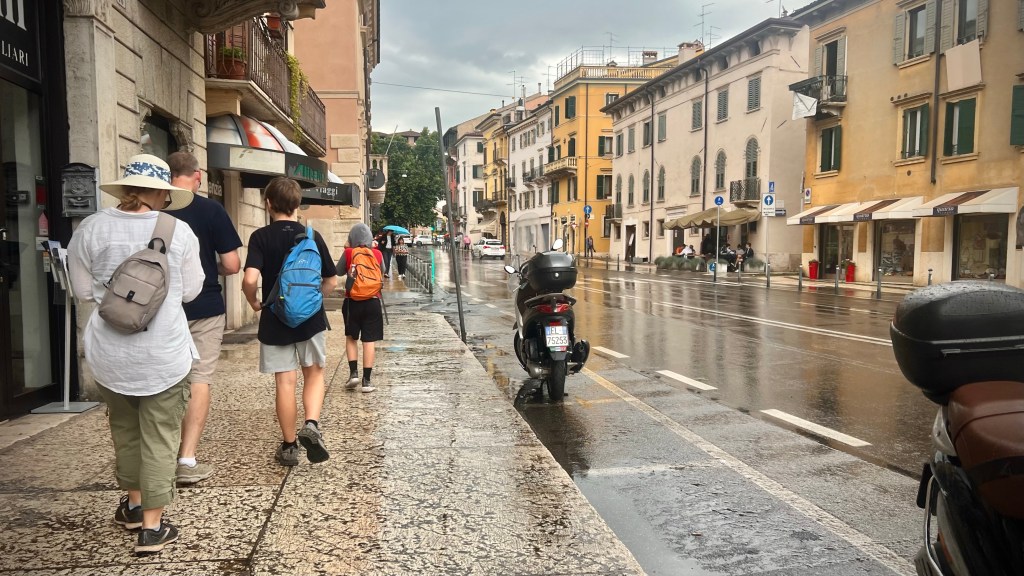
Walking Toledo is part of the experience, not just the way you get between sites. The streets are steep, often winding uphill without warning, and paved in worn cobblestones that have carried centuries of footsteps. You’ll feel the elevation quickly as you climb toward the center, then drop back down through narrow alleys that open unexpectedly into small plazas. 

Questions about safety or ease of exploring Toledo, read more at my 21 Top Toledo Spain Tips.

Stairs to the Toledo wall, Spain

Along the edges of the city, long stretches of the medieval walls are still intact, and while you can’t walk the entire perimeter, there are sections, gates, and viewpoints where you can trace their path and even walk alongside or up to them. These walls, combined with the river below, make it clear how protected Toledo once was. It’s not the easiest city to walk—but that challenge is part of what makes it feel real, unchanged, and worth slowing down for.

Statue of Mary in Toledo, Spain

The Toledo Tourist Bracelet

The Toledo Monumental “Pulsera Turística” (tourist bracelet) can save money if you plan to visit several smaller sites, since one pass covers entry to multiple locations for less than paying individually. You can purchase it at participating sites, then simply show it at each entrance for access.

Cost: ~€12–€14 total
Why it’s worth it: If you visit even four included sites, it pays for itself and simplifies entry.

This pass typically includes entry to seven Toledo locations:

Stone Steps of Toledo streets, Spain
Wisteria at the Paseo de La Vega park, Toledo, Spain

Books to Enhance Your Visit

Before my trip to Toledo, I admit to being pretty ignorant of Spanish history – especially the influence of the Moors! Don’t be like me, and prepare yourself with some reading. Once Toledo sparks your interest – and it likely will – here are some books to read and continue your learning.

For adults or older readers:

  • Don Quixote
    Set in the nearby region of La Mancha, this classic adds cultural and literary context to the landscape around Toledo. Even if you read a children’s version, being familiar with this story will help you better understand Toledo.
  • Espana
    This general history of Spain help connect Toledo to the broader story of the country. Although you can just read the ancient Spanish history chapters, this book does a good job doing all the way into the Spain of today.
  • The Ornament of the World
    A readable and insightful look at medieval Spain, especially the interaction between Christian, Muslim, and Jewish cultures. This was my first “Spain book” and still my favorite. It isn’t an easy read though!
  • Ghosts of Spain
    Through vivid storytelling and firsthand reporting, Ghosts of Spain uncovers the forgotten memories and unresolved history that continue to define contemporary Spain.
  • Driving Over Lemons
    Dream about moving to Spain with this memoir of a family who did just that! Warning: it won’t help you with your temptation to make the same move.
Knight's armor in Toledo, Spain store
Knight’s armor in Toledo, Spain store
Metal statue of Miguel de Cervantes, Toledo, Spain

Final Review of Toledo, Spain

Toledo isn’t something you understand all at once. You walk into it. You climb through it. You piece it together. And somewhere along the way, Toledo’s importance throughout Spain starts to make sense.

If you love history or architecture or exploring other cultures, Toledo, Spain with its winding streets and city walls will be your new favorite place. As a town surviving from tourism, English will be well-understood, the people are friendly, and it’s small enough to not be overwhelmed. Whether taking a day trip from Madrid or staying for a full immersion, don’t overlook the importance of this small town.

Head over to my blog post Toledo, Spain: 21 Top Tips for an Epic First Visit for even more details to make your Toledo trip even more amazing!

#image_title


Bobbie 2022 at garden

I’m Bobbie. After years of planning detailed family trips, I’m diving into travel advising. I’d love to take away the stress and plan a trip for you. Let’s get started today – click here to start.

You can count on me to share honest reviews and answer the questions you need to plan your own trip. My family of six is on a mission to discover all of Georgia’s amazing places, experience amazing road trips across the United States, and create a homeschool life along the way. We even world travel when we can!

Stop by my Instagram or Pinterest page to discover more of our adventures.


Bobbie 2022 at garden

Here at Reclaiming Wonders, we believe that travel isn’t just for those with huge budgets, exotic adventures, or full-time travel schedules. Whether worldschooling, exploring the US, or adventuring in your own backyard, it all counts. Let’s go!